
Arapahoe Criminal Court Records
A criminal court record is the court clerk's file for a prosecution. In Arapahoe County, County Court handles misdemeanors, traffic misdemeanors, felony complaints or advisements, and early stages that may move to District Court. District Court handles felony criminal cases. Once the case opens, the file can include the charging paper, advisements, pleas, motions, hearing minutes, bond orders, disposition, sentence, probation conditions, warrants, and costs.
That case file is different from a sheriff arrest report or jail booking page. The jail display can show custody charges, bond, docket or disposition fields, court date, and location after booking. The court record later shows what prosecutors filed, whether charges were amended or dismissed, and how the case ended. For the charge pathway itself, use Arapahoe County arrest records and court charges; for all case types, use Arapahoe County court records.
The Clerk and Recorder CORA portal is assigned as a manifest image for this page, but it is not the criminal court case channel. The Clerk and Recorder request portal is scoped to Clerk and Recorder records only.
Criminal case files should be requested through Colorado Judicial Branch court channels, while sheriff reports use sheriff records channels.
Search Criminal Court Records
Start with the Colorado Judicial Branch docket search for hearings and case activity. Use Arapahoe County, the 18th Judicial District, and the correct courthouse when known. If a register of actions is needed, the Judicial Branch directs users to commercial vendors for limited online access. If a document copy is needed, use the Judicial Branch Record/Document Request Form or contact the court location at 303-645-6600. Records research questions may go to 18records@judicial.state.co.us.
- Search the court docket by date plus an Arapahoe County filter.
- Use defendant name, case number, attorney, division, or courthouse filters when available.
- Review docket entries for charge events, hearings, plea, disposition, sentence, warrant activity, or bond orders.
- Use a paid vendor register of actions only when the docket is not enough.
- Request official copies from the court, especially for dispositions, sentencing orders, and certified documents.
The Arapahoe County Sheriff's Office page is useful for records requests, inmate lookup, citation payment, and reporting tools, but it does not replace the court clerk for criminal case files.
Sheriff channels help with arrest-side records, while criminal court records come from the state court system.
Arapahoe Criminal Case Stages
A criminal court record grows as the case moves through court. The first entries may reflect a complaint, information, or felony advisement. Later entries may show arraignment, pretrial conferences, motions, bond review, plea, trial, disposition, sentence, probation, restitution, or collections. A single arrest can produce several charges, and each charge can have its own status and outcome.
Case flow: Charges Filed › Arraignment › Pretrial / Motions › Plea or Trial › Disposition › Sentencing
| Stage | What Happens |
|---|---|
| Charges filed | The prosecutor files the formal accusation that opens or advances the criminal case. |
| Arraignment | The defendant is advised of charges and a plea may be entered. |
| Pretrial / motions | Parties file requests, argue evidence issues, discuss plea terms, or set hearings. |
| Plea or trial | The charge is resolved by plea, verdict, dismissal, acquittal, or other court action. |
| Sentencing | The court imposes jail, prison, probation, fines, fees, restitution, treatment, or other terms when there is a conviction. |
Arapahoe Criminal Record Fields
Arapahoe County criminal court records can be read field by field. A docket or register may show short entries, while a requested case document shows the text of the filing or order. The most important distinction is between an accusation, a pending charge, a dismissed charge, and a conviction. Public readers should not treat all visible charges as convictions.
| Field | What It Shows |
|---|---|
| Case Number | The court identifier used to search and request copies. |
| Defendant | The person charged in the criminal case. |
| Charges | Filed offenses, severity level, statute references, amendments, or dismissed counts when shown. |
| Plea | The defendant's formal response, such as guilty or not guilty. |
| Disposition | The outcome of a charge, including conviction, dismissal, acquittal, deferred outcome, or other resolution. |
| Sentence | Jail, prison, probation, fines, fees, restitution, treatment, or conditions imposed after conviction. |
| Bond / warrant | Release conditions, bond amount, bench warrant, warrant recall, or missed-court activity when public. |
The Sheriff Tyler S. Brown profile appears in the manifest for this page because the Sheriff's Office is part of the arrest and custody side of the criminal process.
The sheriff context is useful for custody records, but court-file outcomes still come from the court clerk.
Charges vs. Convictions
Being charged is not the same as being convicted. A charge is the formal accusation filed in court. A conviction is a finding of guilt or a guilty plea accepted by the court. Criminal court records may also show charges that were amended, reduced, dismissed, or resolved through a deferred process. That is why the disposition field matters.
| Charge | Conviction | |
|---|---|---|
| Stage | Accusation filed or pending | Outcome after plea or verdict |
| Meaning | Alleged offense | Established guilt in court |
| Record reading | Check status and disposition | Read sentence and final order |
Sealed vs. Expunged Records
Colorado uses sealing for many adult criminal records and expungement most often in the juvenile context. A sealed record is removed from public access but may remain available to courts, prosecutors, criminal-justice agencies, and other entities allowed by law. Juvenile expungement can allow a person to deny the juvenile matter in many public contexts. Neither process should be assumed from a short docket entry.
| Sealed | Expunged | |
|---|---|---|
| Public visibility | Hidden from most public searches | Treated as not existing for many public purposes |
| Typical Colorado use | Adult arrest or criminal records under statutory rules | Often juvenile records under C.R.S. 19-1-306 |
| Still accessible | Court and criminal-justice access may remain | Access is more limited, subject to law and order |
Criminal Record Access Rules
Colorado Rule of Criminal Procedure 55.1 states the public-access framework for criminal court records. C.R.S. Title 24, Article 72, Part 3 governs many criminal-justice records outside the court file, including sheriff records. C.R.S. 24-72-703 and 24-72-704 address sealing of arrest and criminal records, including no-charge arrest records under statutory conditions. The Colorado Revised Statutes are the official source for the statute text.
Key rule: Criminal court records may be public, but sealed, juvenile, suppressed, or confidential records require clerk review.
The Colorado Department of Corrections inmate locator is assigned to this page's manifest because sentenced state-prison custody is separate from the Arapahoe County court case file.
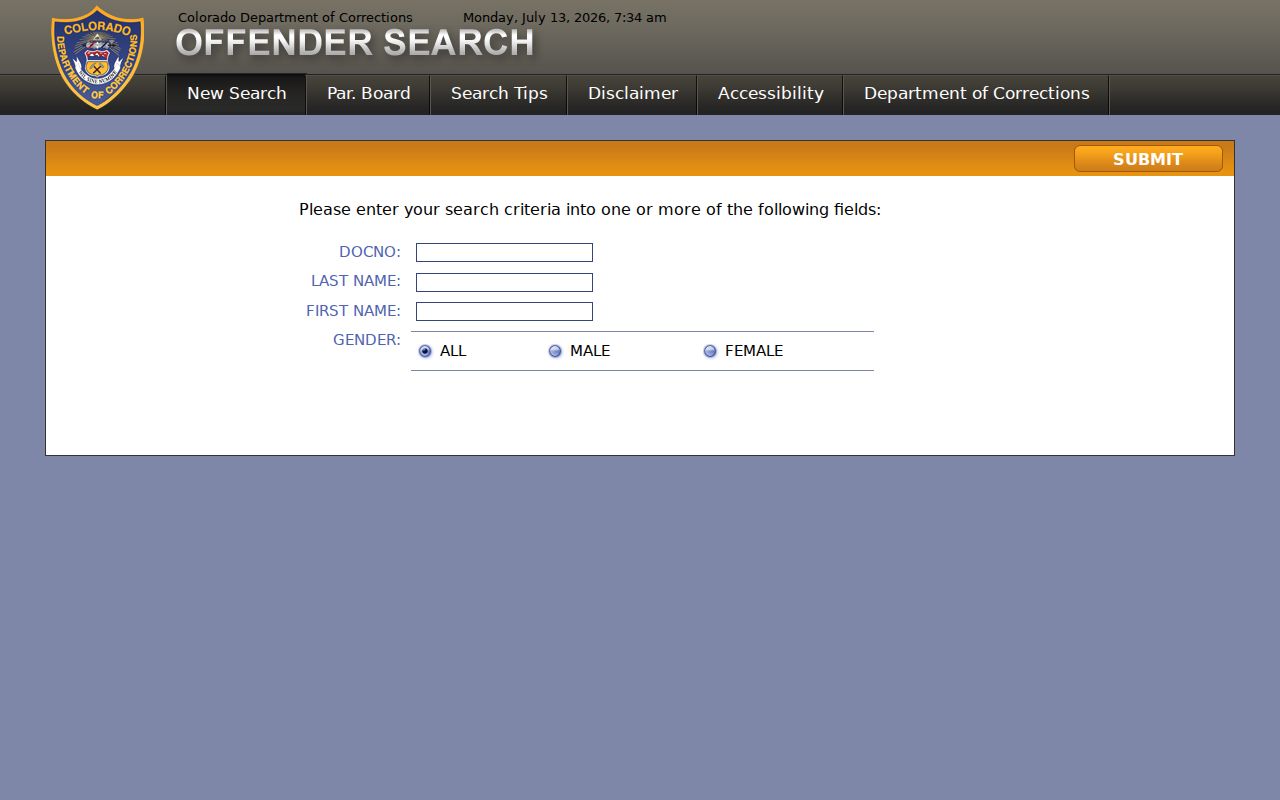
DOC records help locate sentenced state prisoners, while the criminal court record explains how the case reached that result.
Restricted Criminal Court Records
Restricted Arapahoe County criminal court records may include juvenile cases, sealed adult cases, suppressed records, mental health-related filings, protected personal identifiers, victim information, and records affected by court order. Probate and domestic information can also appear beside criminal matters when protection orders or related cases are involved, but access rules differ by case type.
Background checks and casual court searches are not the same thing. Footer legal terms limit consumer-reporting use of the information provided here. For employment, housing, credit, insurance, tenant screening, or other FCRA-regulated purposes, use a compliant consumer-reporting process rather than informal court-record lookup.
The Colorado General Assembly statute page is the official path to Colorado sealing, expungement, CORA, and criminal-justice-record statutes used to interpret Arapahoe County criminal court records.
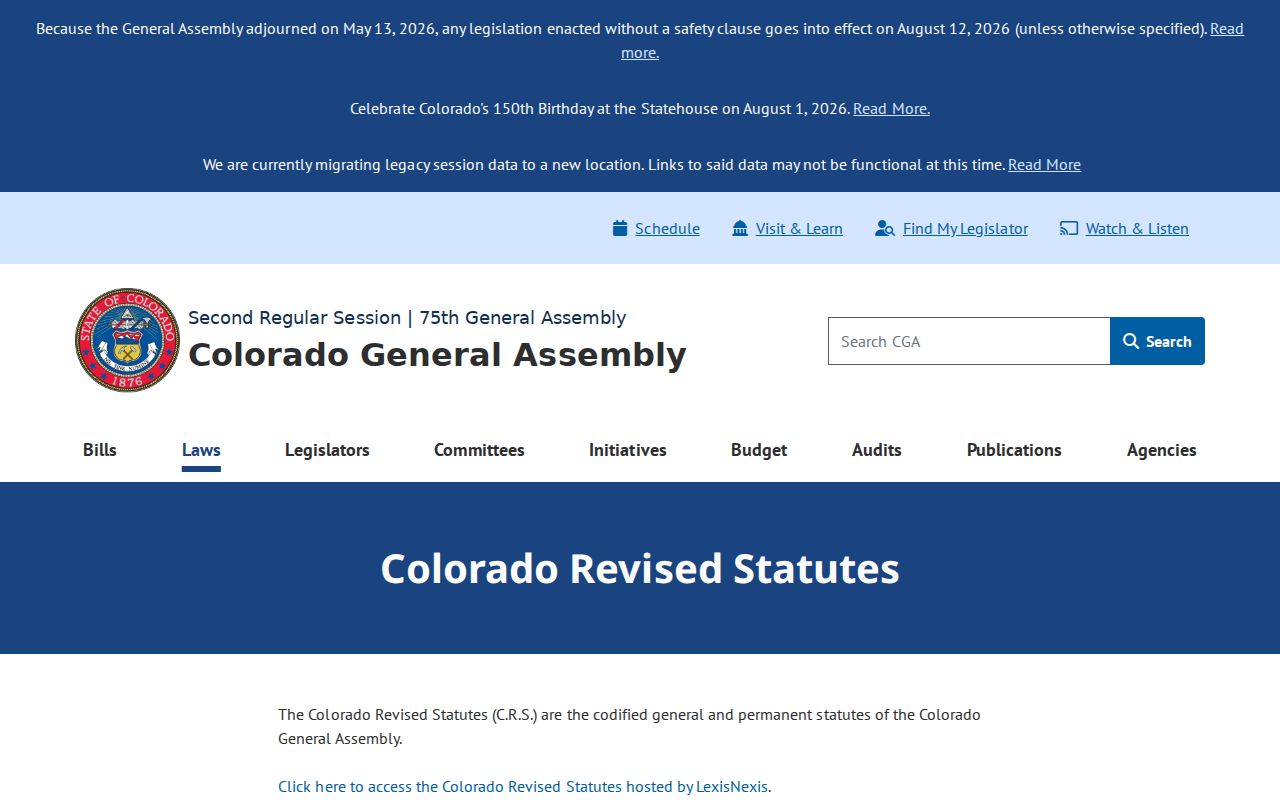
Statutory access rules explain why two criminal records with similar facts may have different public visibility.
DA and Defense Access
The 18th Judicial District Attorney's Office now serves only Arapahoe County. Amy Padden was sworn in on January 14, 2025, when Arapahoe County became the sole county of the 18th Judicial District and Douglas, Elbert, and Lincoln Counties became the 23rd Judicial District. The District Attorney decides what felony and misdemeanor charges to file, whether charges should be amended, and how plea or trial positions are handled. Those decisions appear in criminal court records through charging documents, motions, plea paperwork, dismissals, and sentencing entries.
Defense access may involve a retained attorney or the Colorado State Public Defender. The Arapahoe Public Defender office is at 13356 E. Briarwood Avenue, Centennial, CO 80112, with phone 303-799-9001 and email Arapahoe@coloradodefenders.us in the research. Adults use JDF 208 and juveniles use JDF 219 to apply for a public defender. The Public Defender reviews the paperwork and informs the court whether the person qualifies, while the court makes the final decision.
Bond and First Appearance
Bond and first appearance entries can be part of an Arapahoe County criminal court record. A bond is a release condition intended to ensure court appearance. A personal recognizance bond releases a person based on a promise and conditions instead of a cash payment. Other bonds may require a cash amount, surety involvement, or specific jail and court paperwork. If the person is in custody, the Sheriff's Inmate Lookup, Charges and Bonds page can show public bond fields and the next court date or location.
The court record should still be checked for the legal status of the charge. Jail bond information can show release terms after arrest, but it does not replace the filed criminal case, plea, disposition, or sentencing record. After a missed hearing, a docket may show a bench warrant or warrant recall. Anyone relying on a warrant or bond entry should confirm it with the issuing court because databases may not update instantly.
Problem-Solving Court Records
Some Arapahoe County criminal cases connect to problem-solving court programs. The 18th Judicial District research identifies Wellness Court, Veterans Court, Recovery Court, Sobriety Court, Family Integrated Treatment Court, and Truancy Court. These programs are not separate public-record databases. They are court programs that may appear through docket settings, probation terms, treatment requirements, review hearings, or sentencing conditions when a participant's case is public.
Specialty court information should be read with care. Wellness Court involves felony cases and mental health screening. Sobriety Court concerns high-risk, high-need felony DUI offenders. Recovery Court focuses on severe substance use disorders. Records tied to treatment, mental health, juveniles, victims, or protected family information can be restricted even when the main criminal case has public docket activity. The public docket may show a review hearing without exposing confidential treatment detail.