
Arapahoe County Arrest Records
An arrest record documents the arrest and booking event. It may identify the person arrested, the agency, custody status, booking details, listed charges, bond, bond type, court date, and court location when those details are public. In Arapahoe County, the Sheriff's inmate lookup is the main public custody-side tool once a person has been booked into the detention facility.
A court charge record is different. It begins when the District Attorney or another prosecutor files the charging document with the court. The court charge record shows what charge was filed, whether it was amended, reduced, dismissed, or resolved, and whether a conviction occurred. The full case file and outcome belong on the criminal court record, while custody and current jail status belong with inmate records.
The Arapahoe Inmate Lookup, Charges and Bonds search is the manifest-assigned custody tool for arrest-side charge and bond information.
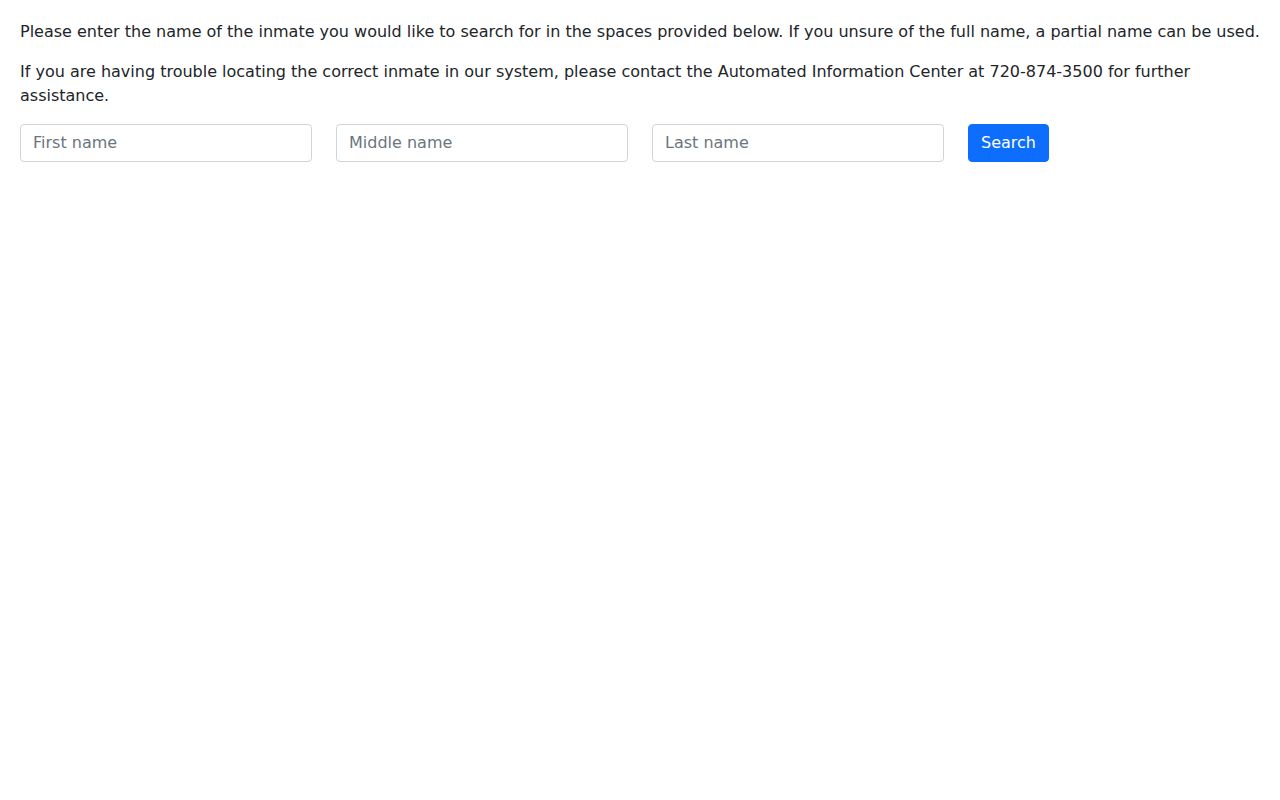
The tool is useful after booking because it displays public custody and bond fields, not the complete criminal case file.
Find Arrest Records and Charges
Use a two-step search. Start with the jail or sheriff channel when the question is whether a person is in custody, what bond is listed, or what court date appears after booking. Then use the Colorado Judicial Branch docket search or court document request process when the question is what charges were filed in court and how those charges changed.
- Search the Inmate Lookup, Charges and Bonds page by last name or partial last name for current custody information.
- Review public fields such as offense, bond, bond type, docket, disposition, court date, and court location when displayed.
- Use the Colorado Judicial Branch docket search for the related criminal case and hearing information.
- Request court documents from the Judicial Branch when a complaint, information, disposition, or sentencing order is needed.
- Use the Sheriff's records request portal for releasable incident reports, accident reports, booking photos, background checks, and in-custody reports.
Bond information has its own county guidance. The Arapahoe bond information page explains bond types and how to find an inmate's bond amount.
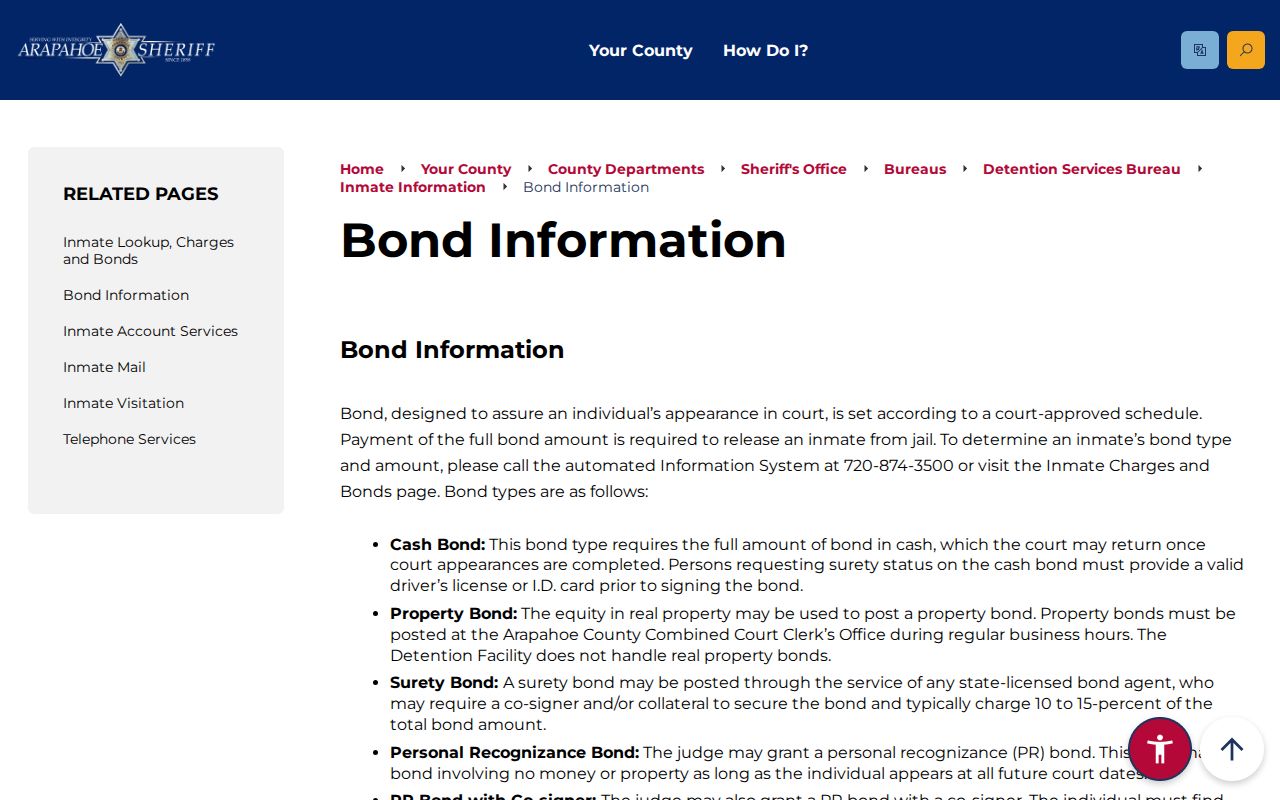
Bond records help explain release terms, but they do not prove whether a charge later became a conviction.
Charges After Arrest
After an arrest, prosecutors decide what formal charges to file. The charging document is the record that moves the matter into court. Colorado criminal cases can involve complaints, informations, and indictments depending on the level and path of the prosecution. Arapahoe County is now the single-county 18th Judicial District, and the District Attorney's Office serves Arapahoe County after the January 14, 2025 judicial district split.
| Complaint | Information | Indictment | |
|---|---|---|---|
| Filed By | Officer or prosecutor, depending on case path | Prosecutor | Grand jury |
| Common Use | Initial criminal accusation or misdemeanor filing | Many felony prosecutions | Serious or grand-jury matters |
| Record Role | Starts or supports the criminal case | States formal filed charges | States charges returned by grand jury |
Arapahoe Charge Status Terms
Charge status can change as a case moves. One arrest can create several charge lines. A prosecutor may amend a charge, reduce it in a plea, add a count, dismiss a count, or proceed to trial. The court record, not the first booking display, is where the current legal status should be checked.
| Status | What It Means |
|---|---|
| Pending | The charge is still open and has not reached final disposition. |
| Amended / Reduced | The filed charge changed, often by prosecutor action, plea terms, or court order. |
| Dismissed | The charge was ended by court or prosecutor action and did not become a conviction. |
| Disposition entered | The charge has an outcome such as guilty plea, verdict, dismissal, deferred result, or other resolution. |
| Warrant or failure to appear | The court may show a warrant event if the person missed court or violated conditions. |
Charges vs. Convictions
A filed charge is an accusation. A conviction is an outcome. Arapahoe County arrest records and charges should be read with that distinction in mind, especially when a booking display lists an offense before the court record shows plea, dismissal, trial, or sentence. Public records can show charges that never became convictions.
| Charge | Conviction | |
|---|---|---|
| Stage | Filed accusation after arrest or summons | Final finding or accepted plea |
| Proof | Probable cause or formal filing | Guilty plea or verdict under criminal proof rules |
| Record clue | Look for pending, amended, or dismissed status | Look for disposition and sentencing entries |
Sealed vs. Expunged Records
Colorado law allows some criminal and arrest records to be sealed. A sealed record is removed from public access but may remain available to courts, prosecutors, and criminal-justice agencies. Arrest records with no charges may be eligible for sealing under C.R.S. 24-72-704, while broader sealing rules appear in C.R.S. 24-72-703. Juvenile matters may involve expungement under C.R.S. 19-1-306.
| Sealed | Expunged | |
|---|---|---|
| Public visibility | Removed from most public access | Treated as not existing for many juvenile-record purposes |
| Typical use | Adult arrest or criminal records if eligible | Eligible juvenile arrest, charge, adjudication, or sentence records |
| Limit | Does not erase all government access | Depends on juvenile law, court order, and exceptions |
Sheriff and Court Channels
Different offices hold different parts of the arrest-to-charge record. The Sheriff's Office handles incident reports, accident reports, booking photos, background checks, in-custody reports, juvenile report requests, and related criminal-justice records. The court handles filed charges, docket entries, dispositions, sentencing orders, and certified case documents. The Clerk and Recorder does not provide court records or sheriff records.
The Sheriff's Records Unit page lists requestable records, hours, payment methods, criminal-justice-record FAQs, and records contacts.
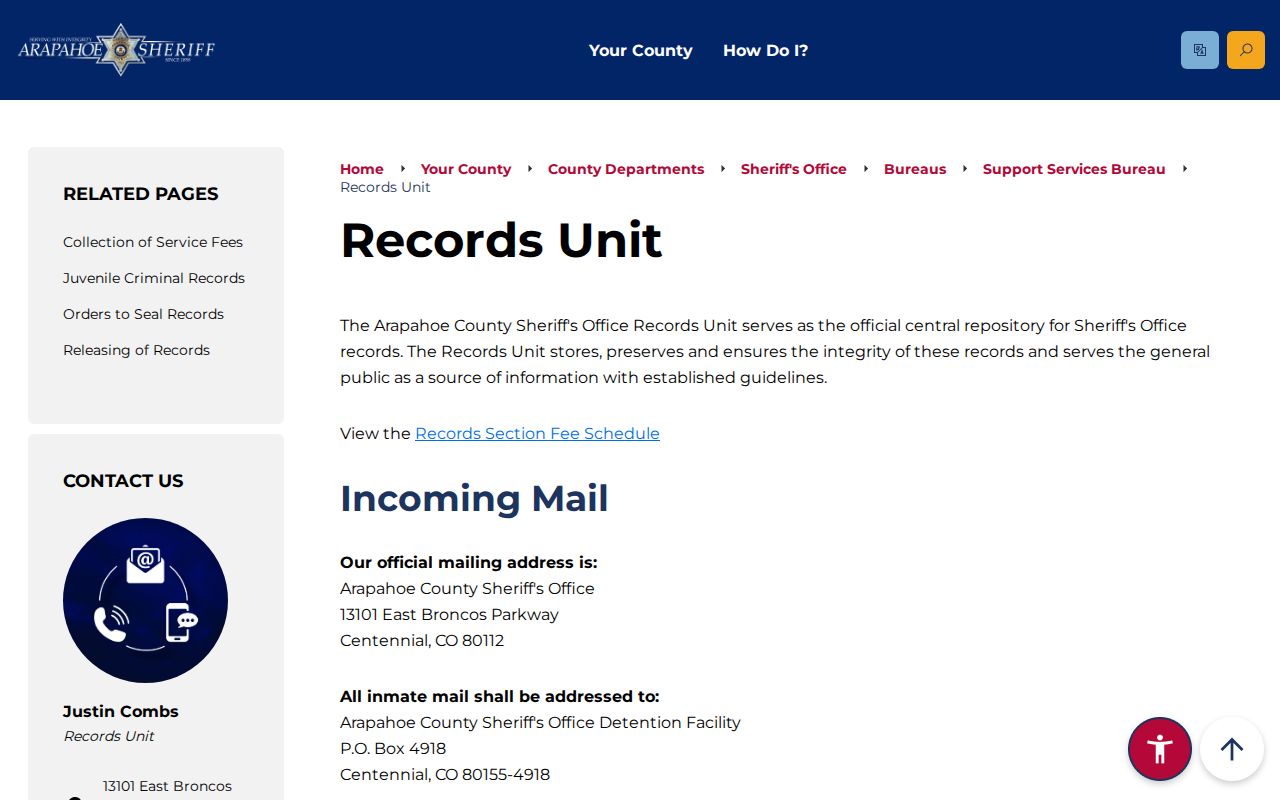
The Sheriff's Records Unit is the right source for releasable law-enforcement records, while filed court charges come from Judicial Branch records.
Restricted Charge Records
Restricted charge records include juvenile matters, sealed criminal records, expunged juvenile records, suppressed cases, protected victim information, mental health details, medical information, protected addresses, and personal identifiers. Ongoing investigations may also limit what sheriff records can be released under Colorado criminal-justice-record rules.
Statewide criminal-history or background screening is a separate use case from public court lookup. The Colorado Judicial Branch and official statutes should be used for court visibility and sealing questions. For employment, tenant, credit, insurance, or other FCRA-regulated decisions, use a compliant background-check process rather than informal public-record searches.
Important: Arrest records and pending charges are not proof of conviction or guilt.
Arapahoe DA Charging Role
The District Attorney controls the formal charging decision after many arrests. The research identifies Amy Padden as District Attorney for the single-county 18th Judicial District after the January 14, 2025 split. The DA's office reported felony filings and traffic-related case increases in later county news, which helps explain why arrest charges, filed charges, traffic misdemeanors, and felony matters can move through different court paths in Arapahoe County.
A booking charge may be based on an arresting officer's information. A filed court charge reflects the prosecutor's formal court action. The filed charge may match the booking display, but it may also be changed after review. That is why an arrest record should be followed by a court docket or document request when the goal is to know the current filed charge, final disposition, or sentence.
Bond Paperwork and Court Dates
Bond records connect the arrest side to the court side. The inmate charges and bonds lookup can show bond amount, bond type, docket or disposition field, court date, and location after booking. The bond information page explains that a money bond payor pays the bond amount and that bond payments are made to the holding county, not to the incarcerated person. Bond paperwork should identify the next court date or provide instructions for obtaining it.
After release, the next court date still matters. Missing court can produce a bench warrant and a new docket entry. If a warrant is recalled or a bond is changed, confirm the update with the issuing court because public displays may lag. For civil or warrant unit questions, the research lists the Sheriff's Civil and Warrants Unit at 720-874-3845 during Monday-Friday 7 a.m.-5 p.m.; court warrants tied to state cases go through 303-645-6600.
Correcting Charge Records
Corrections depend on which record is wrong. If a sheriff report, booking photo, or in-custody report is at issue, use the Sheriff's records process. If a court charge, disposition, sentence, or case document is wrong, contact the Clerk of Court or file the proper court motion. If the issue is public visibility after dismissal, no charges filed, sealing, or juvenile expungement, use Colorado Judicial Branch forms and the statutes that apply to the case type.
The Recording Division and Clerk and Recorder CORA portal should not be used to correct court charges. They handle recorded documents and Clerk and Recorder records, not criminal court files. The most reliable first step is to identify the case number, issuing court, arresting or booking agency, and current docket status before asking an office to correct, release, or seal a record.
When an arrest has no filed charges, the court may have little or no case file to search. In that situation, sheriff or agency records and Colorado sealing rules for no-charge arrests become more important than the court docket. When charges were filed and later dismissed, both the court record and the arrest-side record may need review.